Who is Not Eligible for ILOE in UAE?
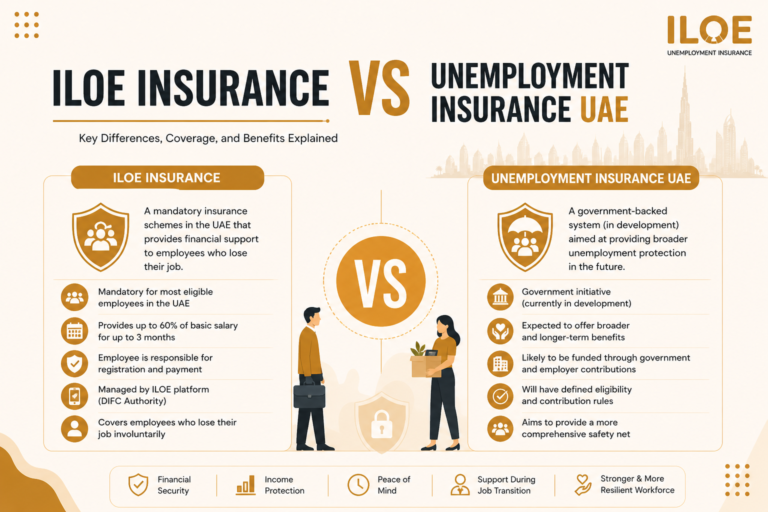
The UAE introduced the Involuntary Loss of Employment (ILOE) scheme to provide financial support to employees who lose their jobs due to reasons beyond their control. The system was created to improve job security and help workers manage temporary unemployment periods while searching for new opportunities. Although the program covers a large number of employees in the country, not everyone qualifies for the insurance scheme.
Some workers believe every employed person in the UAE must register, while others are unsure whether their visa type or job category qualifies under the unemployment insurance system. Understanding these rules is important to avoid registration mistakes and compliance issues.
The UAE government has clearly identified several categories that are exempt from ILOE registration. These exclusions are based on employment status, labor classification, contract structure, and visa type. In this guide, you will learn which individuals are not eligible for ILOE, why certain groups are excluded, and how eligibility is determined under UAE regulations.
Who is Not Eligible for ILOE?
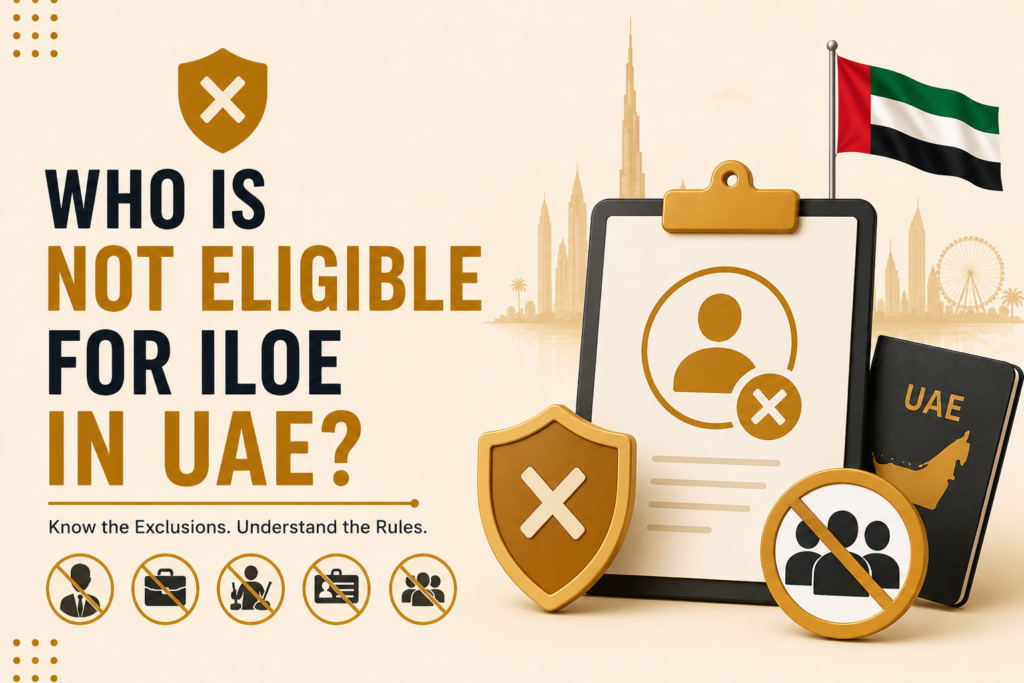
The UAE government has specified several groups that are exempt from the unemployment insurance system. These categories are usually excluded because they do not fall under standard employee structures or already have separate financial arrangements.
Below are the main categories of people who are not eligible for ILOE in the UAE.
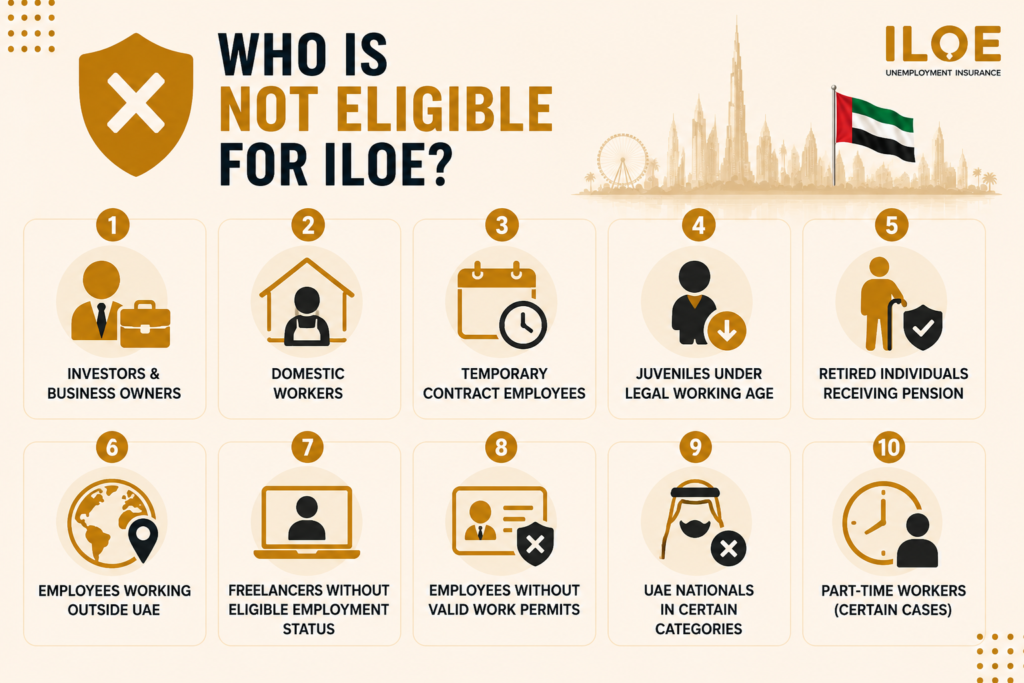
1. Investors and Business Owners
Investors and company owners are generally not eligible for the ILOE scheme. This includes individuals who own businesses or are registered as business partners under commercial licenses.
The reason behind this exemption is that investors are not considered regular salaried employees under UAE labor regulations. Their income usually comes from business profits, investments, or company ownership rather than fixed employment contracts.
Since the unemployment insurance system is designed mainly for employees working under employer-sponsored contracts, investors are excluded from mandatory coverage.
2. Domestic Workers
Domestic workers are another category excluded from the ILOE program. This includes workers employed in private households such as:
Domestic workers operate under separate labor laws and regulations in the UAE. Their employment structure differs from regular private-sector employment, which is why they are not included in the unemployment insurance system.
Although they are protected under other labor policies, they are generally not required to register for ILOE.
3. Temporary Contract Employees
Some employees working under temporary or short-term contracts may not qualify for ILOE coverage. These workers are hired for limited projects or specific durations rather than long-term employment.
The UAE labor system distinguishes between permanent and temporary employment arrangements. Since unemployment insurance focuses on stable employment relationships, certain temporary workers may fall outside the eligibility criteria.
However, eligibility may still depend on contract type and labor registration details.
4. Juveniles Under the Legal Working Age
Individuals below the legally approved working age are not eligible for ILOE registration. UAE labor laws contain strict rules regarding the employment of minors to ensure their protection and safety.
Because unemployment insurance applies to officially employed adults under legal labor structures, minors are excluded from the program.
5. Retired Individuals Receiving Pension
Retired individuals who already receive pension benefits are usually not covered under the ILOE system. Retirement benefits are considered a separate financial support structure, which means these individuals are not categorized as active employees.
Since the purpose of unemployment insurance is to assist active workers who unexpectedly lose employment, retired pension holders are generally exempt from registration.
6. Employees Working Outside the UAE
The ILOE system mainly applies to employees working within the UAE under official labor contracts. Individuals employed outside the country or under foreign employment systems are not covered under the scheme.
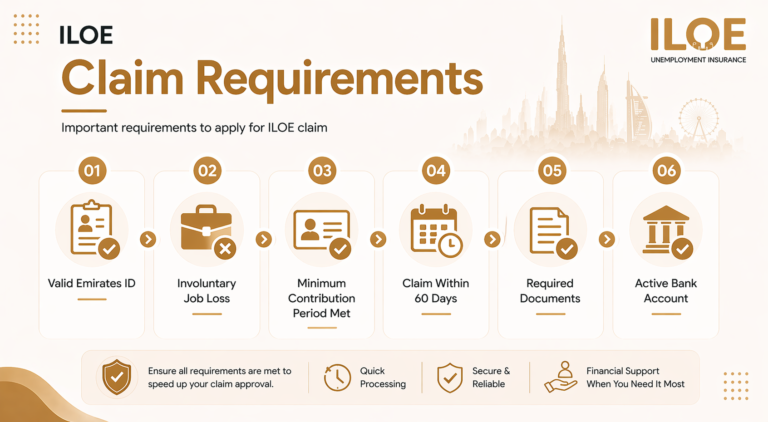
To qualify for ILOE, employees typically need:
Workers who do not meet these conditions are generally not eligible.
7. Freelancers Without Eligible Employment Status
Freelancing has become increasingly common in the UAE, but not all freelancers qualify for unemployment insurance. Eligibility often depends on visa category, permit type, and employment classification.
Some freelancers operate as self-sponsored professionals rather than employees working under company contracts. Since the ILOE system mainly targets salaried employees, certain freelance categories may not qualify for coverage.
Freelancers should always verify their eligibility through official channels before attempting registration.
8. Employees Without Valid Work Permits
Employees who do not have valid work permits or legal labor status are not eligible for ILOE registration. Maintaining valid employment documentation is an important requirement under UAE labor law.
If a worker’s:
they may not qualify for unemployment insurance coverage until their employment status is corrected.
9. Certain Government and Special Employment Categories
Some government-related employment categories may have separate regulations or exemptions regarding unemployment insurance. Eligibility can vary depending on employment classification and official labor category.
Certain groups may already have alternative protection systems or special employment arrangements that differ from standard private-sector employees.
10. Some Part-Time Employees
Part-time employees may not always qualify for ILOE coverage, depending on how their contracts are structured. In some situations, eligibility depends on whether the worker is officially registered under approved labor systems.
Since part-time work arrangements vary widely, employees should review their employment status carefully before registering
Why Some Categories Are Exempt from ILOE
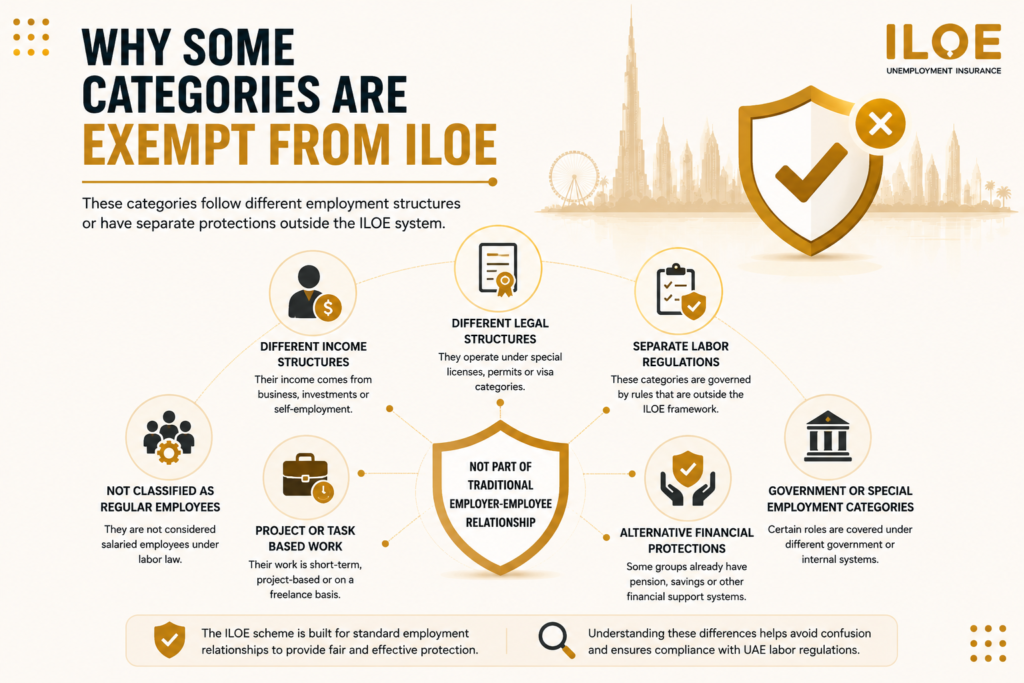
Many people wonder why certain workers are excluded from the unemployment insurance system. The answer mainly relates to employment structure and labor classification.
The ILOE scheme is specifically designed for traditional employer-employee relationships where workers receive fixed salaries and work under registered labor contracts. Categories like investors, freelancers, and domestic workers often follow different legal structures.
Some groups also have separate financial protections or labor regulations that operate outside the unemployment insurance system.
Importance of Understanding Eligibility Rules
Learning about Who is Not Eligible for ILOE is important for both employees and employers. It helps individuals:
It also ensures that only eligible employees participate in the unemployment insurance system.
Common Misunderstandings About ILOE Eligibility
Many people in the UAE misunderstand the eligibility rules of the ILOE unemployment insurance system. Because the scheme applies to a large number of employees, some individuals assume that every resident or worker must register. However, the actual rules depend on employment category, visa type, and labor classification. Understanding these common misconceptions can help avoid confusion and unnecessary registration attempts.
“All UAE Residents Must Register”
One of the biggest misconceptions is that every UAE resident is required to subscribe to the ILOE scheme. This is not true. Eligibility is mainly based on employment status and labor classification. Certain categories, such as investors, domestic workers, and some freelancers, may be exempt from the system.
“Freelancers Automatically Qualify”
Many freelancers believe they are automatically eligible for unemployment insurance. In reality, eligibility depends on the freelancer’s visa type, permit structure, and employment status. Some freelancers operate as self-sponsored professionals rather than salaried employees, which may exclude them from the ILOE program.
“Business Owners Can Subscribe”
Another common misunderstanding is that company owners and investors can register for ILOE insurance. Generally, investors and business owners are exempt because they are not considered regular employees working under employer-sponsored labor contracts.
“Temporary Workers Always Need ILOE”
Some people assume that all temporary or short-term workers must register for unemployment insurance. However, eligibility may vary depending on the contract structure and official labor registration status.
Frequently Asked Questions
2. Are freelancers eligible for ILOE?
Eligibility depends on visa type and employment classification. Some freelancers may not qualify.
3. Can business owners apply for ILOE?
No, business owners and investors are usually exempt because they are not classified as regular salaried employees.
4. Are domestic workers covered under ILOE?
No, domestic workers follow separate labor regulations and are not included in the unemployment insurance scheme.
Conclusion
The UAE unemployment insurance system provides important financial protection for eligible employees, but it does not apply to everyone. Understanding Who is Not Eligible for ILOE is essential for avoiding confusion and ensuring compliance with UAE labor regulations.
Categories such as investors, domestic workers, certain freelancers, temporary workers, and individuals without valid work permits are generally excluded from the system due to differences in employment structure and labor classification.
Before registering for ILOE, employees should always verify their eligibility through official channels. Staying informed about these rules helps workers better understand the UAE labor system and avoid unnecessary issues related to registration or compliance.