ILOE Insurance Categories Explained UAE
ILOE (Involuntary Loss of Employment) insurance in the UAE is designed to provide financial support to employees who lose their jobs due to reasons beyond their control. While most people understand the basic idea of the scheme, many are still confused about how the category system works.
The UAE has divided employees into specific categories based on their basic salary, which directly affects how much they pay and how much they can receive in compensation. Understanding these categories is important not only for compliance but also for making sure you receive the correct benefits when needed. In this article, we will clearly explain ILOE insurance categories, salary limits, contribution amounts, and how to determine which category you fall under.
What Are ILOE Insurance Categories?
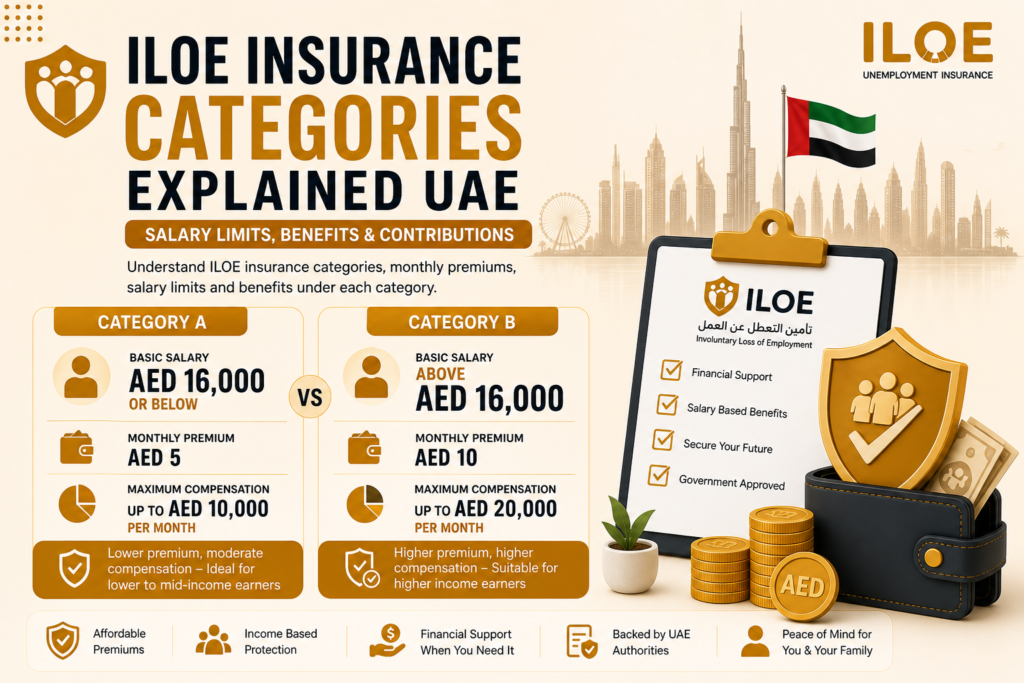
ILOE insurance categories are a structured way to group employees based on their basic salary. Instead of applying a complex or variable contribution system, the UAE has simplified the process by dividing workers into fixed categories. Each category has a set premium amount and a defined maximum compensation limit.
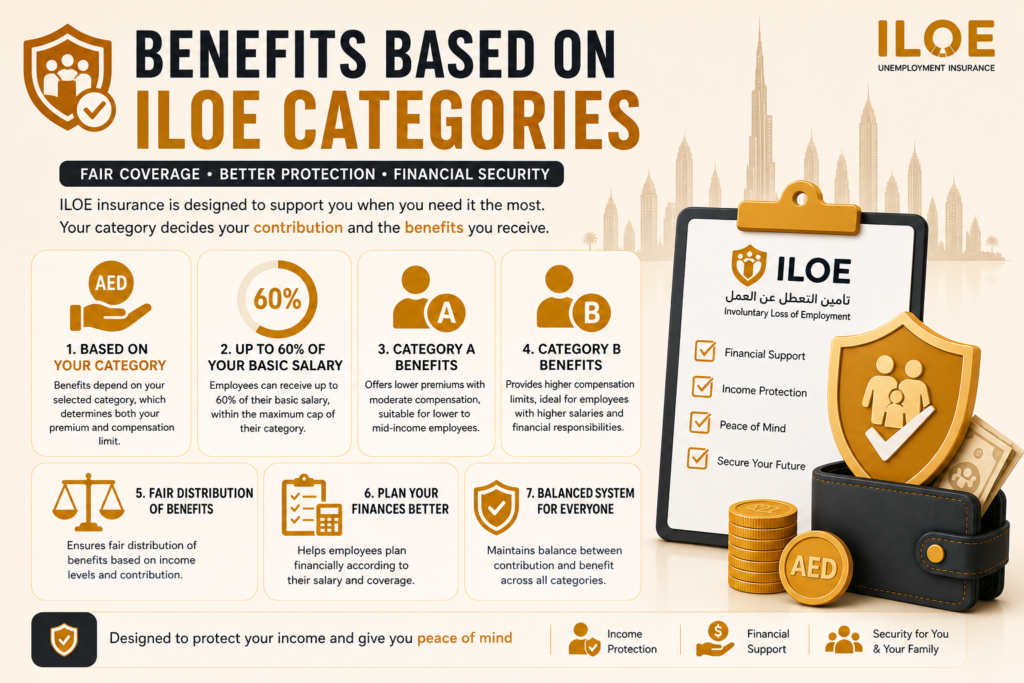
The purpose of this system is to ensure fairness while keeping the process simple and easy to manage. Employees with lower salaries pay a smaller premium, while those earning higher salaries contribute slightly more. At the same time, compensation is also adjusted accordingly, ensuring that benefits remain proportional and practical.
This category-based approach helps standardize the scheme across different industries and job levels, making it easier for both employees and authorities to manage.
ILOE Insurance Categories in UAE
Category | Basic Salary Range | Monthly Premium | Maximum Compensation |
|---|---|---|---|
Category A | AED 16,000 or below | AED 5 | Up to AED 10,000/month |
Category B | Above AED 16,000 | AED 10 | Up to AED 20,000/month |
These two categories simplify the system by clearly defining how much employees need to contribute and what they can expect in return. It removes confusion and ensures consistency across the workforce.
Category A Explained (Low to Mid Salary Group)
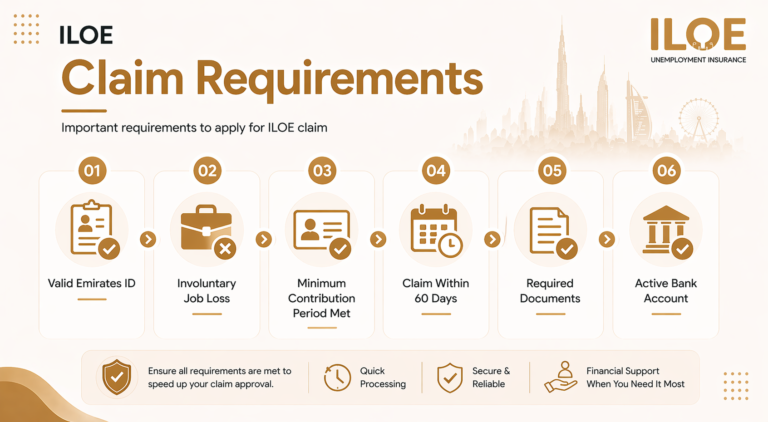
Category A includes employees whose basic salary is AED 16,000 or below. This category covers a large portion of the workforce in the UAE, including entry-level, mid-level, and many skilled professionals. The monthly premium for this group is AED 5, making it affordable and accessible for most employees.
In terms of benefits, employees in Category A can receive up to AED 10,000 per month as compensation if they lose their job involuntarily and meet all eligibility requirements. The actual payout is typically calculated as a percentage of the basic salary, up to the defined limit.
This category is designed to balance affordability with meaningful financial support. While the premium is low, the coverage still provides a helpful safety net during unemployment, especially for those managing regular living expenses.
Category B Explained (High Salary Group)
Category B is designed for employees earning a basic salary above AED 16,000. This group includes senior professionals, managers, and higher-income individuals working across various industries in the UAE. The monthly premium for Category B is AED 10, which reflects the higher earning level of individuals in this group.
The maximum compensation under this category is up to AED 20,000 per month, offering stronger financial support compared to Category A. This ensures that higher earners receive proportionate coverage that aligns with their income level.
Although the contribution is slightly higher, the benefits are also significantly increased, making Category B suitable for individuals who require a higher level of financial protection in case of job loss.
How to Determine Your ILOE Category
Determining your ILOE category is straightforward, but it requires careful attention to your salary details. The category is based strictly on your basic salary, not your total salary, which may include allowances such as housing or transportation.
To find your category, you can check your employment contract or payslip, where your basic salary is clearly mentioned. You can also confirm this information through your employer’s HR department or official UAE labor records.
Selecting the correct category is important because it directly affects your premium payments and potential compensation. Choosing the wrong category may lead to issues when claiming benefits or even require corrections later.
Benefits Based on ILOE Categories
What Happens If You Choose the Wrong Category?
Choosing the wrong ILOE category can lead to several issues. If you select a lower category despite having a higher salary, you may pay less but receive reduced benefits or face claim complications.
On the other hand, selecting a higher category unnecessarily may result in overpayment without additional practical advantage. In both cases, corrections may be required, which can take time and effort.
To avoid such problems, it is always best to verify your salary details and ensure your category selection is accurate from the beginning.
Practical Example
Consider an employee earning a basic salary of AED 12,000. This individual falls under Category A and pays a monthly premium of AED 5. If they lose their job involuntarily, they may receive compensation based on their salary, up to the maximum limit of AED 10,000.
Now take another employee earning AED 20,000 as a basic salary. This person falls under Category B and pays AED 10 per month. In case of job loss, they can receive higher compensation, up to AED 20,000 per month, depending on eligibility.
These examples show how categories directly impact both contributions and benefits
Frequently Asked Questions
Q2: What is Category A in ILOE?
It applies to employees earning AED 16,000 or below.
Q3: What is Category B in ILOE?
It is for employees earning above AED 16,000.
Q4: Can I change my ILOE category?
Yes, you can update your category if your salary changes or if you selected incorrectly.
Conclusion
ILOE insurance categories in the UAE are designed to create a simple and fair system for all employees. By dividing workers into two clear groups based on basic salary, the scheme ensures that contributions and benefits remain balanced and easy to understand.
For employees, the most important step is to correctly identify their category and stay updated if their salary changes. This not only ensures compliance but also guarantees that they receive the right level of financial protection when needed. Understanding your category today can make a significant difference during unexpected job transitions.